How Much Does A Kitchen Renovation Cost? A Budgeting Guide For Wagga Wagga Homeowners
A kitchen renovation costs anywhere from $10,000 for a cosmetic refresh to $70,000 or more for a full reconfiguration, with cabinetry choice, benchtop material and layout complexity driving most of the variation. These figures are general indicators only – your actual price depends entirely on the scope of work and the specifics of your kitchen. This guide breaks down exactly what pushes a renovation budget up or down, so you can walk into a design consultation with realistic expectations.
What Actually Drives the Cost of a Kitchen Renovation
Kitchen renovation cost isn't set by square metreage alone. Two kitchens of the same size can land tens of thousands of dollars apart, depending on the decisions made within them.
The main cost drivers are cabinetry type, benchtop material, whether appliances are replaced or reused, how much the layout changes and whether plumbing or electrical services need to be relocated. Finishing details like splashbacks and hardware add a smaller but still meaningful amount on top. Understanding each of these levers lets you make informed trade-offs rather than guessing at a final number.
Cabinetry: Flat-Pack vs Custom Cabinetry Cost
Cabinetry is usually the single largest line item in a kitchen renovation, and it's also where the biggest cost swings happen. Flat-pack or off-the-shelf cabinetry is the more affordable option because it's mass-produced to standard dimensions, but it often requires compromises on fit, especially in older Wagga Wagga homes with non-standard wall alignments or awkward corners.
Custom cabinetry cost in Australia sits higher because every cabinet is built to the exact dimensions of your space, with joinery, finishes and internal storage tailored to how you actually use the kitchen. For homeowners after maximum storage efficiency or an irregular layout solved properly, the extra investment in custom cabinets crafted to meet unique needs and meticulously designed to complement the space tends to pay off in daily usability. It's worth pricing both approaches side by side rather than assuming custom is automatically out of budget. The gap is often smaller than expected once fitting and rework costs are factored in.
Benchtop Material Tier & Its Impact on Price
Benchtops move the budget almost as much as cabinetry does. Laminate sits at the affordable end, offering a wide range of colours and patterns without the price tag of stone. Engineered stone (quartz) sits in the mid-to-upper tier, prized for durability and a consistent, low-maintenance finish. Natural stone, such as granite or marble, generally commands the highest price due to material cost, slab availability and specialist installation.
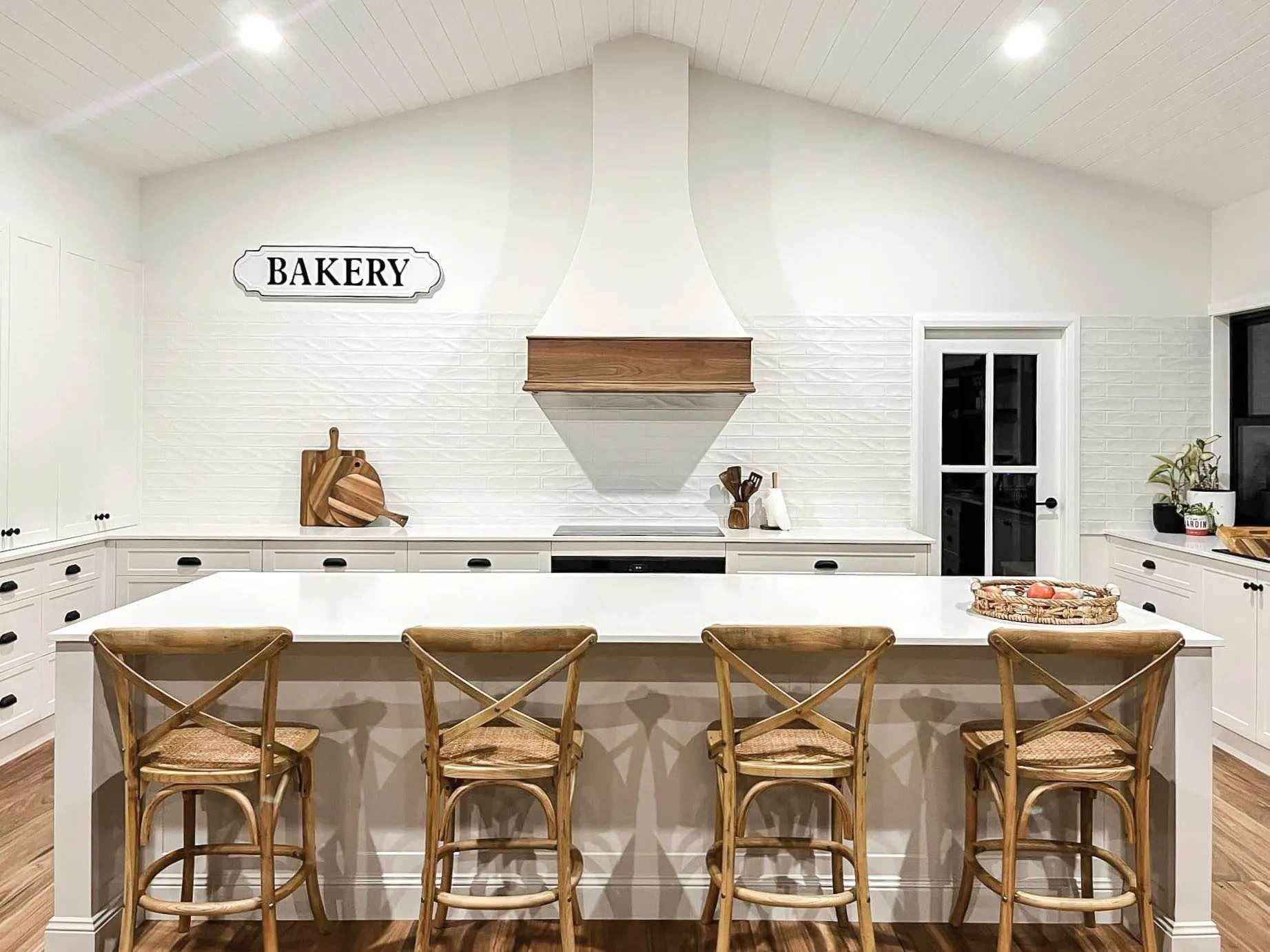
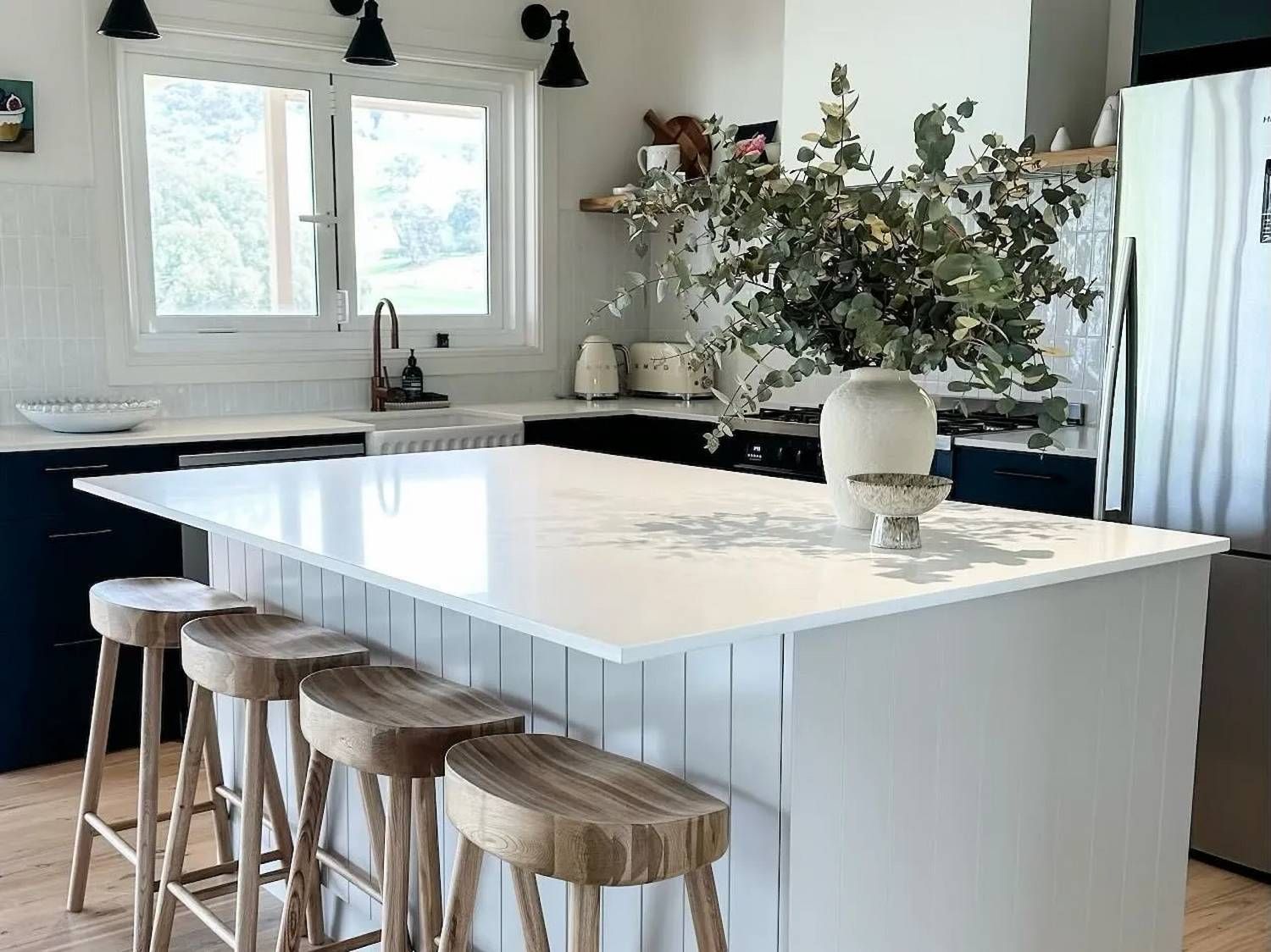
Length and edge profile also matter – a waterfall edge or an oversized island benchtop uses considerably more material than a standard straight run. If budget is tight, a good strategy is to spend more on the benchtop where it's most visible (the island) and choose a more economical material for secondary runs.
Appliance Upgrades vs Reusing What You Have
Appliances can be one of the easiest places to control cost, or one of the quickest ways to blow a budget. Reusing existing appliances that are still in good working order – provided they fit the new cabinetry dimensions – keeps this line item close to zero.
Full appliance upgrades, on the other hand, particularly integrated or European brands, can add several thousand dollars fast. A practical middle ground many homeowners choose is replacing only the appliances that are failing or genuinely outdated, while designing cabinetry around the appliances they're keeping. This is worth flagging early in a design consultation, since cabinetry dimensions are built around final appliance choices.
Layout Complexity: Like-for-Like vs Reconfiguration
A like-for-like renovation – new cabinetry, benchtops and finishes in the existing footprint – is the most cost-effective approach because it avoids moving plumbing, gas or electrical points. Reconfiguring the layout, such as relocating the sink, adding an island or opening the kitchen to a living space, adds cost well beyond materials and labour for the cabinetry itself.
Reconfiguration often means structural work too, particularly if a wall is being removed or altered. It's not a reason to avoid reconfiguring a poor layout, but it does mean the budget needs to account for trades beyond cabinetry from the outset.
Electrical & Plumbing Relocation Costs
Any time a sink, cooktop, rangehood or dishwasher moves from its existing location, electrical and plumbing work is triggered. Relocating a single point – say, moving a sink 1.5 metres along a wall – is a modest cost. Relocating multiple services simultaneously, or running new circuits for additional appliances like a second oven or an induction cooktop, adds up faster.
This is one of the most commonly underestimated costs in a kitchen renovation budget. Homeowners often price cabinetry and benchtops carefully but overlook that moving a water or gas point isn't a simple job. It usually requires a licensed plumber or electrician working around the existing structure of the home.
Finishing Details: Splashbacks & Hardware
Splashbacks and hardware are smaller line items individually, but together they shape both the final look and the final invoice. Tiled splashbacks sit at the more affordable end and offer strong design flexibility. Glass and stone splashbacks cost more but give a seamless, easy-to-clean finish that many homeowners prefer for busy kitchens.
Hardware – handles, hinges, soft-close drawer systems – is easy to overlook in early budgeting but adds up across a full kitchen. Soft-close mechanisms and heavier-duty drawer runners cost more than basic hardware but significantly extend the lifespan of the cabinetry, which is worth weighing against the small cost difference.
Realistic Cost Brackets by Scope (Cosmetic Refresh, Mid-Range, Full Reconfiguration)
These brackets are general and indicative only, intended to give Wagga Wagga homeowners a starting point for budgeting – not a fixed quote. Actual pricing depends on kitchen size, material choices and the specifics of your home.
- Cosmetic refresh (new doors, benchtop, splashback, hardware, no layout change): typically the lowest-cost option, suited to kitchens with a sound existing layout that need a visual and functional lift.
- Mid-range renovation (full cabinetry replacement, benchtop upgrade, some appliance changes, layout largely unchanged): the most common scope for established homes, balancing improved function against moderate spend.
- Full reconfiguration (layout change, plumbing/electrical relocation, full cabinetry and benchtop replacement, new appliances): the highest-cost bracket, reflecting the added trades and structural considerations involved.
Where your project sits within – or beyond – these brackets depends on the decisions covered in the sections above.
Why an Itemised Quote Beats a National Average
National average figures are a reasonable starting point for research, but they're built from renovations that may bear little resemblance to your kitchen, your home or the Wagga Wagga market. An itemised quote breaks the project down by cabinetry, benchtop, appliances, trades and finishing details, so you can see exactly where your budget is going and adjust individual elements if needed.
This is also the only way to genuinely compare quotes between providers – a lower headline number can hide a narrower scope of inclusions. For homeowners planning kitchen renovations in Wagga Wagga focused on functionality, finish quality and long-term value, an itemised quote is the most reliable way to turn a rough budget into an accurate one.
If you're ready to move from research to real numbers, the team at Kreuzer Cabinets – kitchen cabinet makers in Wagga Wagga with a decade of experience in custom cabinetry – can walk you through an itemised quote based on your actual kitchen, not a national average. Get in touch for a free consultation to start budgeting with real numbers instead of guesswork.
Frequently Asked Questions
How much does a small kitchen renovation cost in Australia?
A small kitchen renovation generally falls toward the cosmetic-refresh to mid-range brackets, since less cabinetry and benchtop material is needed overall. The final cost still depends heavily on material tier and whether appliances or layout are changing.
Is custom cabinetry more expensive than flat-pack?
Yes, custom cabinetry generally costs more upfront because each piece is built to your exact space. The gap narrows once fitting, rework and long-term durability are factored in, particularly in homes with non-standard dimensions.
Does moving my kitchen sink or cooktop add much to the cost?
Relocating plumbing or electrical points adds cost beyond cabinetry and benchtops, since licensed trades are required for each service moved. Moving one point is a modest addition; moving several at once adds up faster.
What's the difference between a mid-range and full reconfiguration renovation?
A mid-range renovation typically keeps the existing layout and replaces cabinetry, benchtops and some appliances. A full reconfiguration changes the layout itself, which usually triggers plumbing, electrical and sometimes structural work.